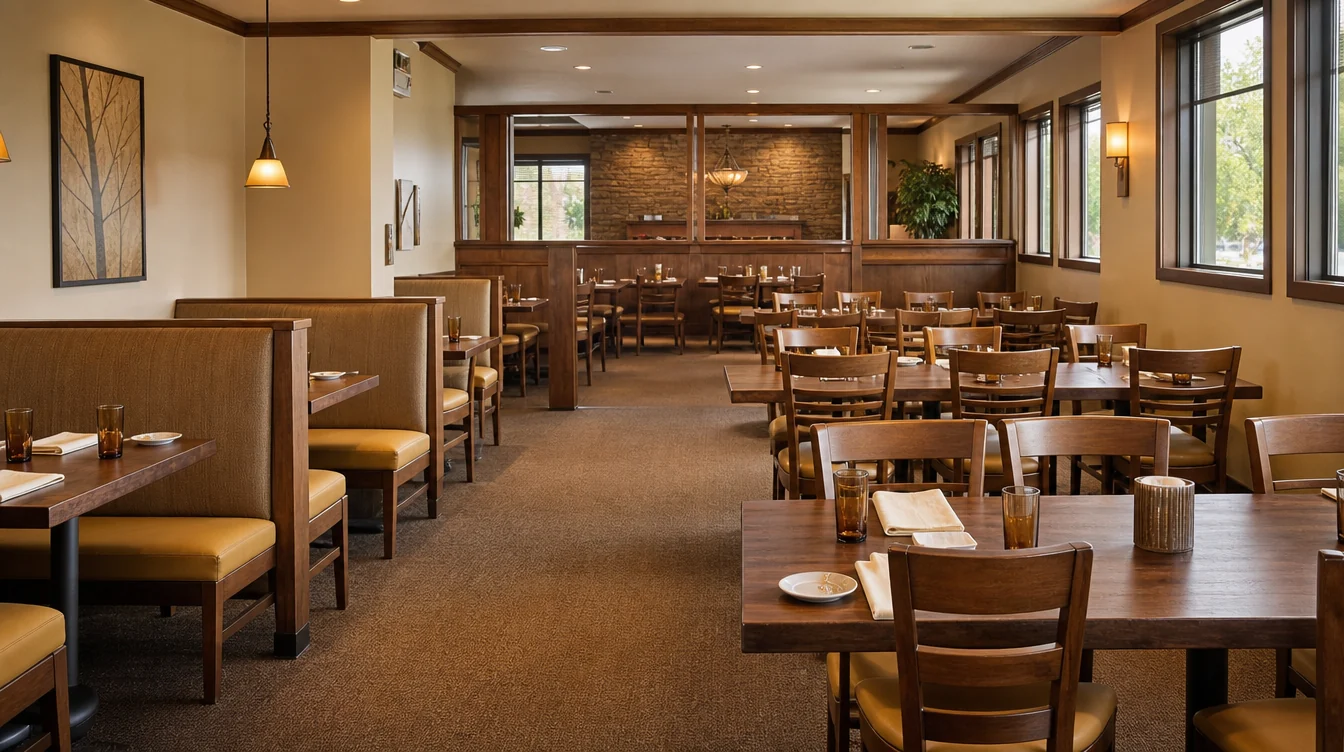
Try the daily chair-and-table routine before repeating the order.
A Wisconsin restaurant can use a small staff trial to turn a chair-and-table shortlist into a practical buying specification. Review one proposed group through the actual cleaning and rearrangement routine, using the item information and any available sample. Record what staff handle, where unused pieces wait and which questions need answers before repeating the selection across the room.
01 / THE FURNITURE PLAN
Write the routine before trying the furniture.
List the ordinary steps staff take: pull out chairs, move the table where the actual routine requires it, clean using the applicable guidance and return the complete group. Identify who will review the trial and what information is already available for the proposed items. Keep the trial within the model’s confirmed handling instructions rather than improvising a method.
02 / THE FURNITURE PLAN
Review one complete chair-and-table group.
Ask what samples or item information are available and use the exact proposed configuration as the trial reference. Record chair dimensions and the table’s top-and-base arrangement. During the routine, note the relationship between chair legs, table bases and adjacent furniture. Keep observations specific enough to distinguish a dimensional question from a staff preference about the group.
03 / THE FURNITURE PLAN
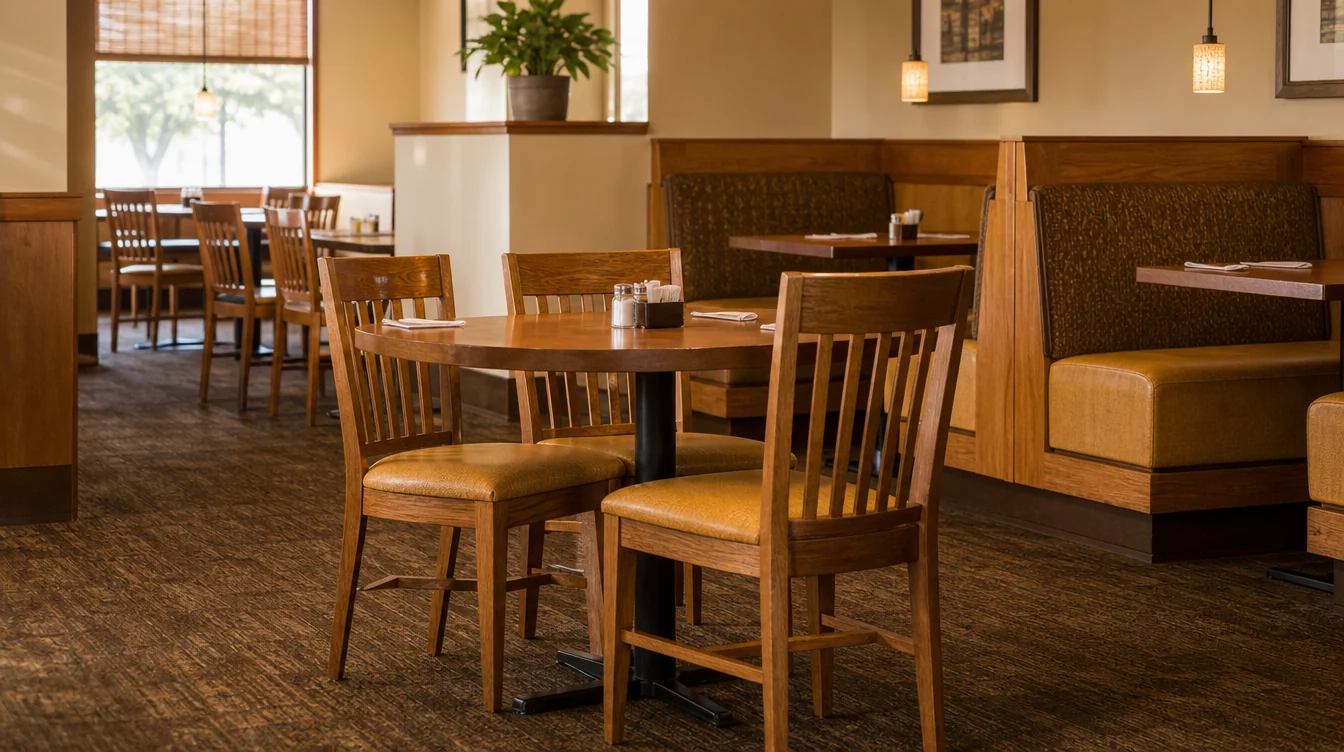
Record what happens to the table assembly.
Identify whether staff move the complete table or leave it in place. Record any questions about the top, base, attachment or care instructions and ask for information about that exact combination. If a different table option is proposed, give it a separate trial record. A changed top or base should not inherit the first assembly’s review automatically.
04 / THE FURNITURE PLAN
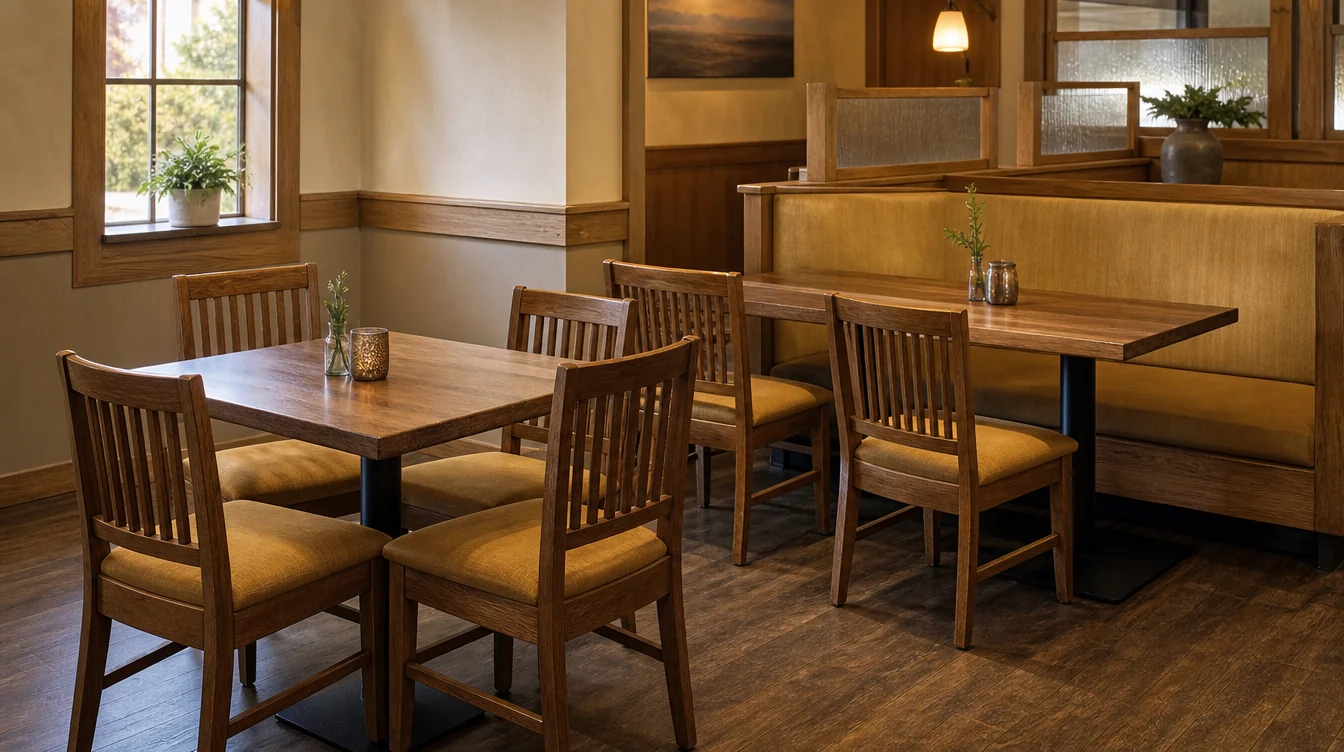
Map where furniture waits during the routine.
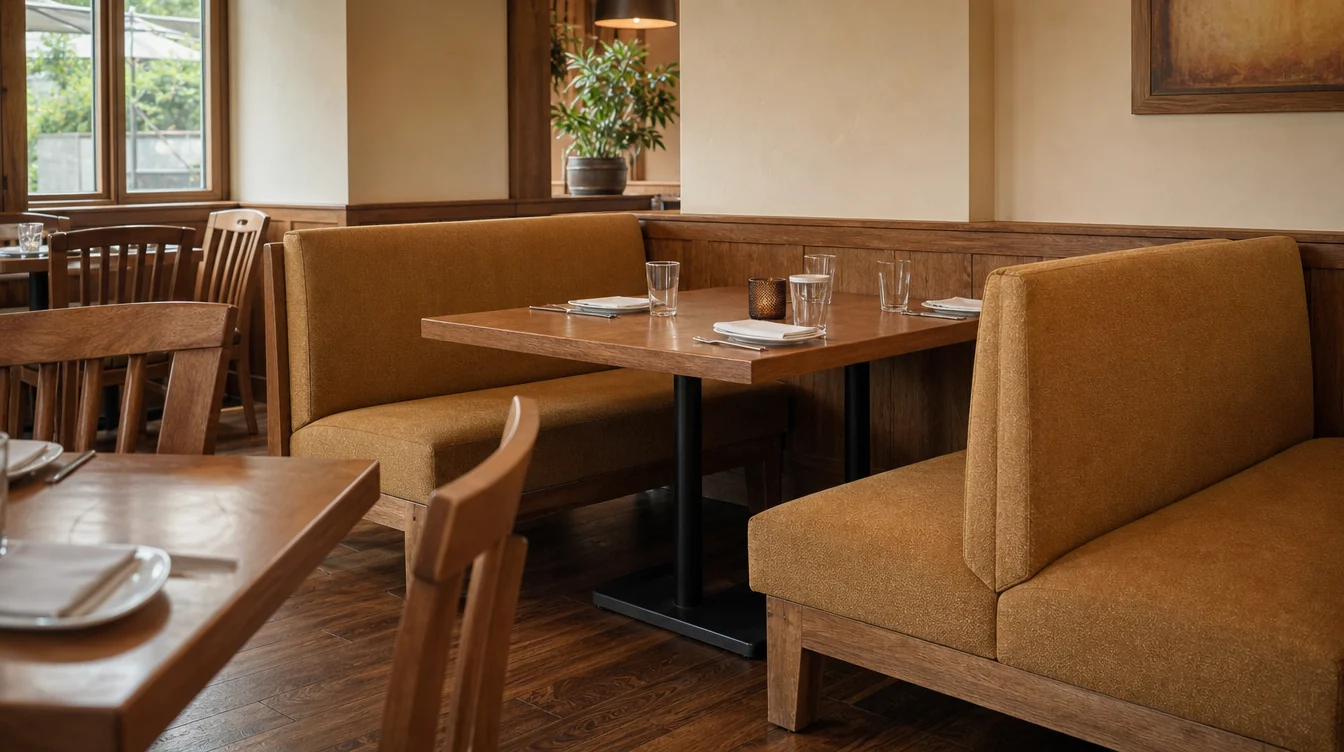
Show the actual holding location for chairs or tables that leave the working arrangement. Record how many pieces wait there and whether the routine overlaps with another room’s use. Ask about supported handling and any applicable storage information for the exact model. Keep booth tables as a separate group if their fixed-seating relationship requires a different routine.
05 / THE FURNITURE PLAN
Turn observations into specification decisions.
For each issue, record the observed step, the product question, the answer needed and the person reviewing it. Mark the resulting decision: keep the option, compare another configuration or leave the item unresolved. Save the model and sample references with that record. Do not turn an observation into an unsupported stacking, durability or care-performance claim.
06 / THE FURNITURE PLAN
Request quantities from the reviewed arrangements.
Count the loose chairs required in each arrangement staff actually intend to use, including any groups used simultaneously. Add explicitly chosen extras and subtract compatible retained pieces once. Send the Wisconsin location, the current furniture schedule and the unresolved trial questions. This ties the inquiry to a repeatable routine and a clear item list rather than a general handling preference.
A WORKED FURNITURE EXAMPLE
A chair-count decision after the staff trial
Suppose the ordinary dining arrangement needs 40 loose chairs and a second reviewed arrangement needs 44. These are alternative setups using the same inventory, so the working requirement is 44, not 84. With two chosen extras and ten compatible chairs retained, the preliminary purchase is 36. The trial also records the holding location for chairs temporarily removed during cleaning; it does not create an additional purchase by itself.
| Planning item | Quantity |
|---|---|
| Ordinary arrangement | 40 chairs |
| Alternative reviewed arrangement | 44 chairs |
| Working requirement, shared inventory | 44 chairs |
| Chosen extras | 2 chairs |
| Compatible chairs retained | −10 chairs |
| Preliminary new-chair purchase | 36 chairs |