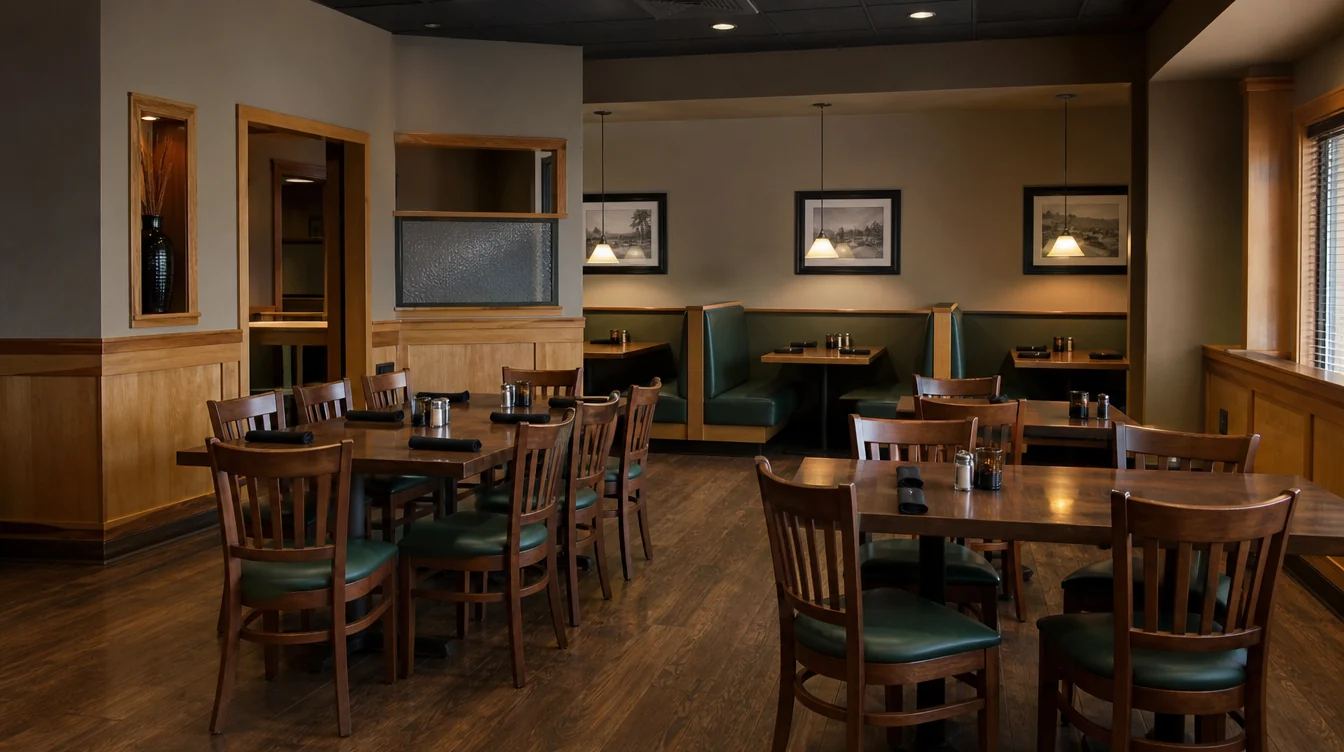
Know which pieces can stay before adding new ones.
An Ohio restaurant with several generations of furniture benefits from an inventory before it starts comparing new chairs. The useful question is which complete groups still work with the intended room, not simply how many pieces are on site. Record the tables, loose chairs and booths separately, then build a replacement request around the groups the operator wants to change.
01 / THE FURNITURE PLAN
Sort the current collection into useful groups.
Give each chair and table type an identifier and record its quantity. Photograph a complete group rather than only a single item. Mark pieces retain, replace or review, and keep observed condition separate from assumptions about repair or future service life. This creates a clear starting point for comparing a new proposal.
02 / THE FURNITURE PLAN
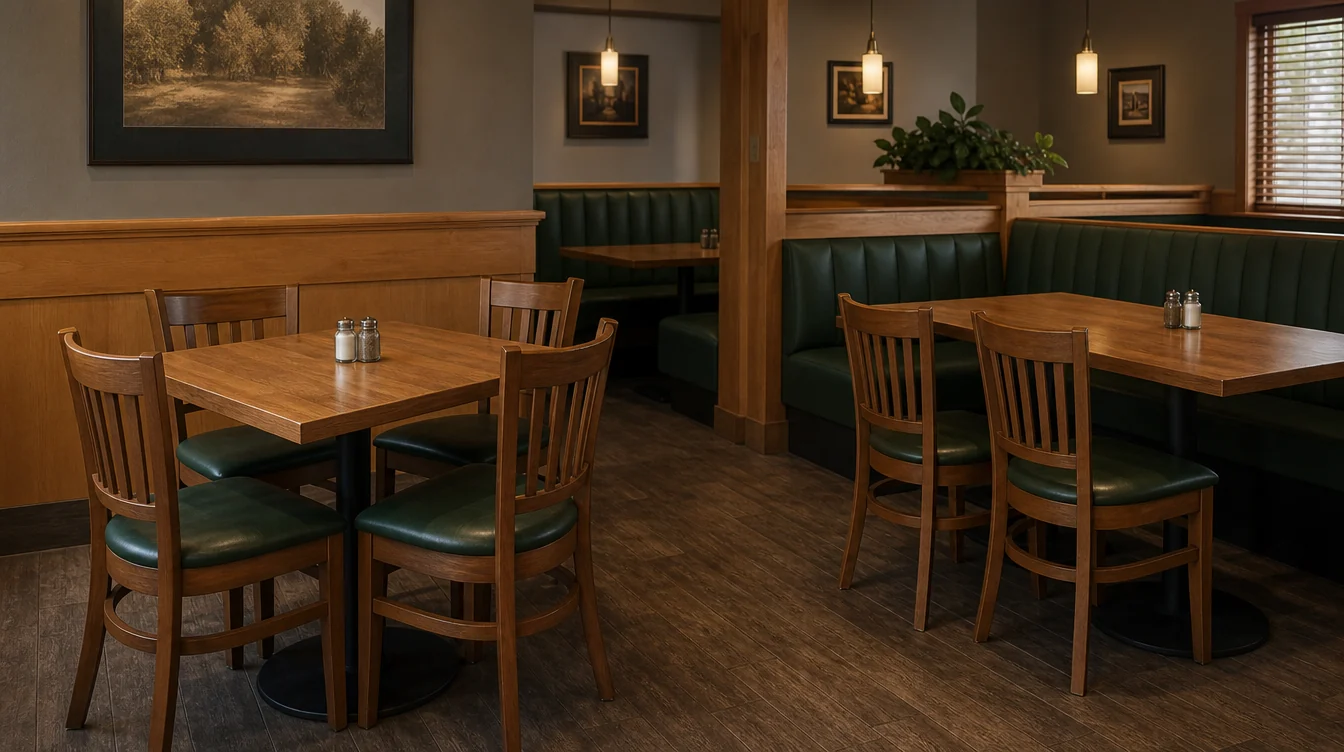
Check one chair across the table types.
If the team wants a single chair model, compare it with every table type that will remain. Review the actual dimensions, neighboring chair positions and the space beneath the top. Record exceptions on the schedule instead of assuming one successful comparison proves the same model works throughout a mixed dining room.
03 / THE FURNITURE PLAN
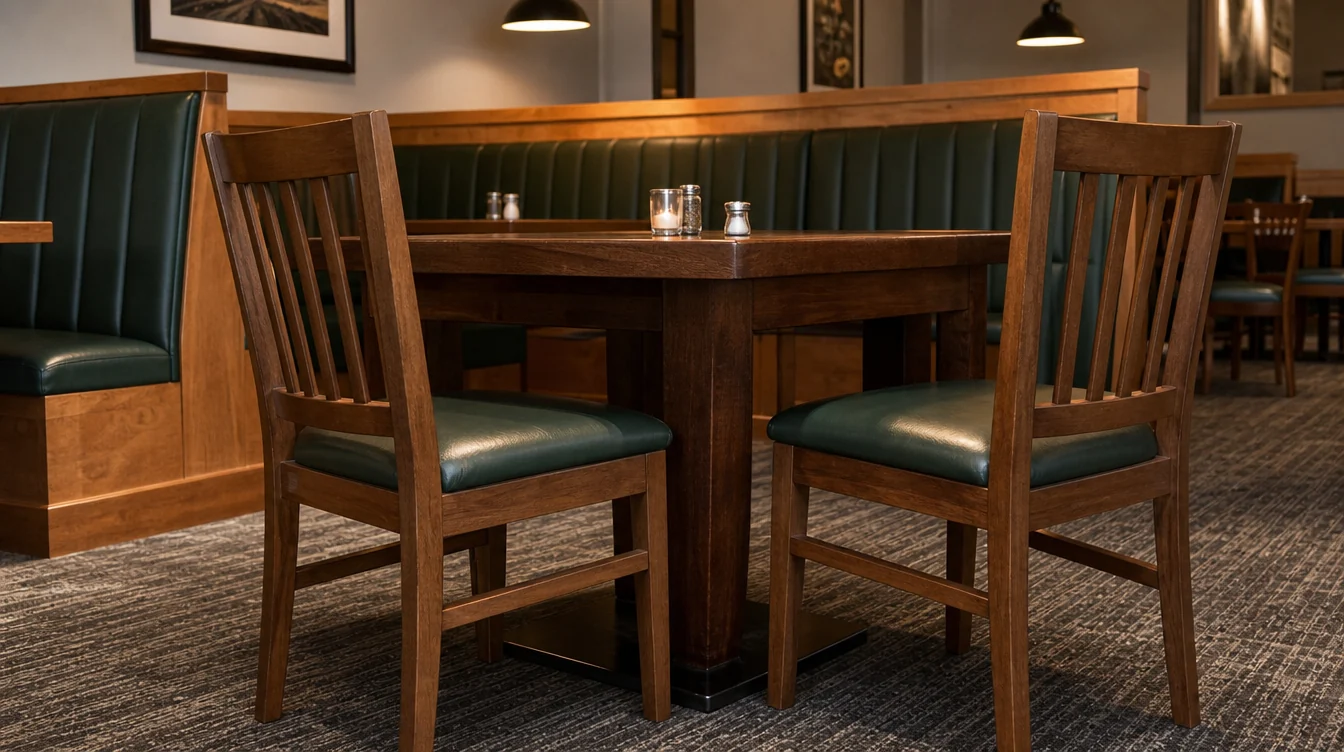
Decide whether tables need full replacement.
Identify whether the concern involves a tabletop, a base or the complete unit. Request the information needed to assess the exact top-and-base combination. A replacement top should not be selected from finish alone. Keep dimensions, attachment details and any questions about the retained base together in the same record.
04 / THE FURNITURE PLAN
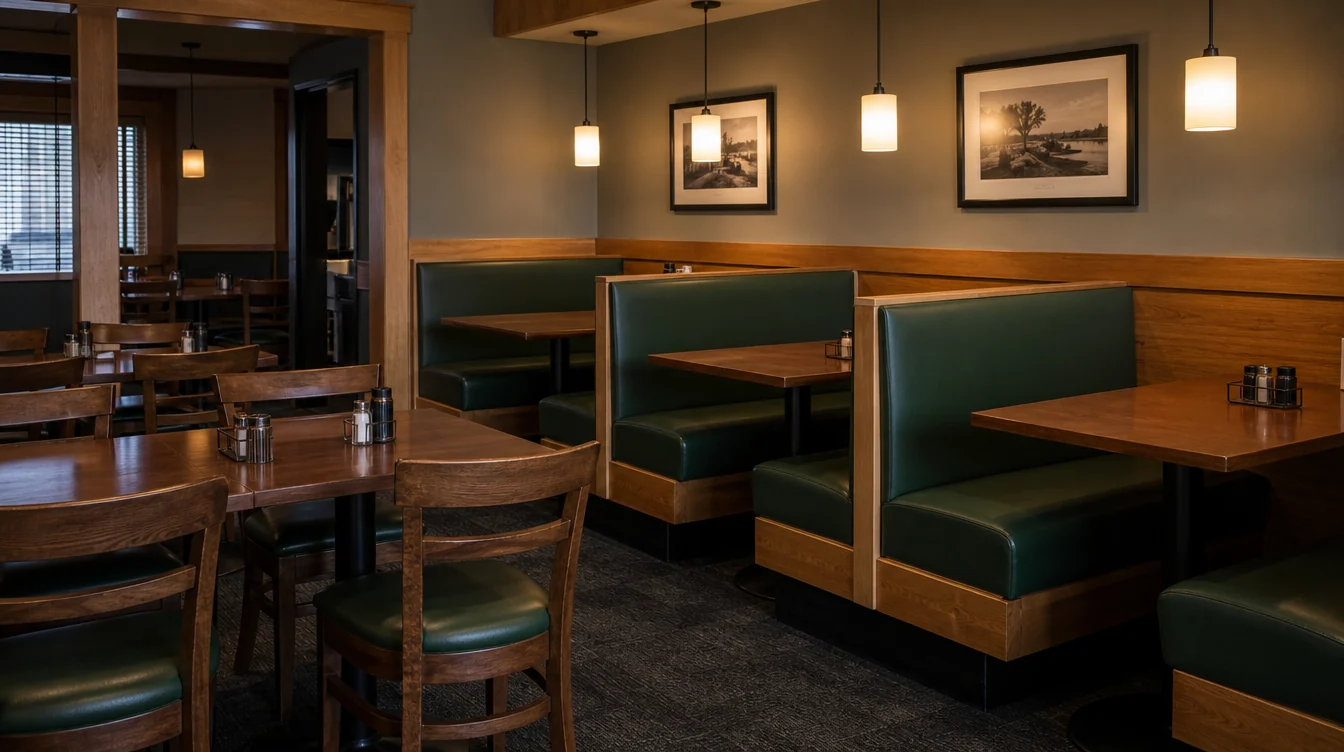
Keep the booth refresh visible.
A booth section may share the new chair palette while needing a different purchasing process. Record each unit, its table arrangement and surrounding fixed features. Specify booth work separately from loose chairs and ask which dimensions or site information are needed to develop an accurate proposal for that group.
05 / THE FURNITURE PLAN
Choose a workable first replacement stage.
Mark the furniture group that will change first and the pieces that remain in use nearby. Record where new furniture can be received and inspected, and how the team plans to clear the area. Ask about delivery and handling scope against that sequence rather than assuming the entire room changes at once.
06 / THE FURNITURE PLAN
Keep one current purchasing list.
Send the Ohio city, photographs, group identifiers and the current retain-or-replace schedule through the inquiry. Include model or style references and unresolved sample questions. When the scope changes, update the same list so the team can distinguish a new quantity from an earlier option being considered.
A WORKED FURNITURE EXAMPLE
Mixed table and booth inventories — a quantity example
The reviewed loose-table plan needs 64 chairs. The operator chooses eight additional pieces and retains 24 compatible chairs, producing a preliminary purchase of 48. Five booth units remain a separate review item. Their dimensions and tables are recorded individually rather than folded into the chair quantity.
| Planning item | Quantity |
|---|---|
| Working loose dining chairs | 64 |
| Chosen additional chairs | 8 |
| Compatible chairs retained | −24 |
| Preliminary new-chair purchase | 48 |
| Booth units reviewed separately | 5 |