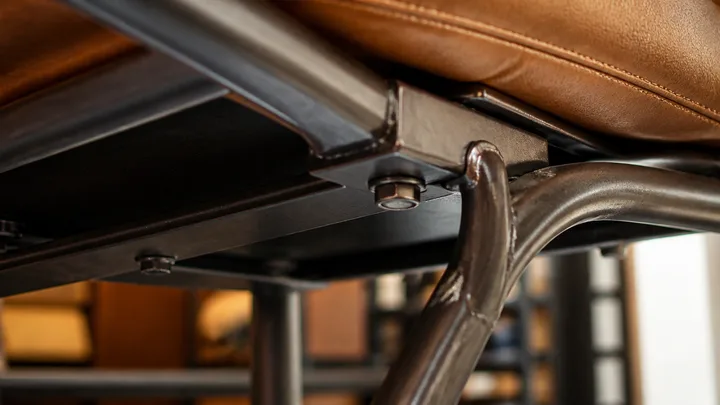
Before ordering replacement restaurant chairs, decide whether you are matching an existing model, replacing a complete seating zone or changing the whole room. Those are different requests. A supplier needs the quantity, dimensions, intended use and finish requirements, not just a photograph of the chair you like.
Start a replacement furniture plan and separate chairs that will remain in service from those being replaced.
Work out why the existing chairs failed
Inspect the current stock and record the problem by chair or batch. Useful categories include loosened joints, damaged seats, worn upholstery, missing glides, finish damage and poor fit at the table.
A recurring issue can point to a specification or maintenance problem. Reordering the same appearance without understanding the failure may repeat it. Have structural concerns assessed by someone qualified; do not perform improvised load tests or return suspect chairs to guests.
Search identifiable models in the CPSC recall database and follow any applicable recall instructions. A search that finds nothing is not proof that a chair is safe.
Identify what you already own
Look for a manufacturer label, model number and original invoice. Photograph the front, back, side, underside, joints and floor-contact parts. Measure overall width and depth, seat height and arm height if applicable.
Do not assume visually identical chairs are interchangeable. Different production versions can have different dimensions or replaceable parts. Ask the original supplier whether the model is still made and whether the current version matches yours.
If an exact replacement is unavailable, compare these options:
| Approach | Suitable question to ask |
|---|---|
| Replace individual chairs | Can the supplier confirm the same model, dimensions and finish? |
| Replace a complete table group | Will the new group look deliberate beside the retained seating? |
| Replace a full zone | Can one consistent specification simplify later reorders? |
| Repair selected chairs | Is there a supported repair, and who is qualified to perform it? |
Verify the chair at your actual tables
Obtain a sample before committing to a large order where practical. Check the widest point of the chair, not only its seat. Arms, angled legs and a projecting back can affect how many chairs fit and how far they extend into circulation.
Sit at the intended table, test tucking the chair in and have staff move it during a normal reset. Check base interference, handling weight, floor glides and cleaning access.
A comfortable chair tested alone can be awkward under your existing table. Record the combination that was approved so the final order cannot quietly change one half of it.
Specify finish and upholstery precisely
Ask which frame colors, seat materials and upholstery options are available for that exact model. Note minimum quantities, additional charges and any timing difference. “Available in other colors” is not a promise that every option is stocked.
For upholstered seats, ask about the whole specification: fabric construction, seams, cleaning instructions and replacement-seat availability. ACT's performance guidelines distinguish relevant textile properties; an abrasion number alone is not a complete selection brief.
Keep the approved finish sample and code. If retaining older chairs, acknowledge that wear and production variation can make an exact visual match difficult.
Count purchases and spares separately
Use a simple reconciliation: planned chairs in service, minus serviceable chairs retained, equals chairs needed for the proposed arrangement. Add any deliberately chosen spares as a separate line.
For example, a hypothetical 40-chair requirement with 28 suitable chairs retained means 12 replacements before any spares. That arithmetic does not validate the seating layout or require a particular spare percentage.
List why you want spares, where they will be stored and whether a later reorder is practical. Do not buy extras automatically if storage will obstruct operations.
Request a replacement-specific quote
Send model identifiers, measurements, photographs, quantity, finish choices and the receiving location. Ask about stock confirmation, assembly, freight, warranty and disposal of old chairs.
Use the replacement planner to record the confirmed specification. For broader construction differences, the commercial versus residential chair guide is supporting reading, not a substitute for checking the actual replacement model.