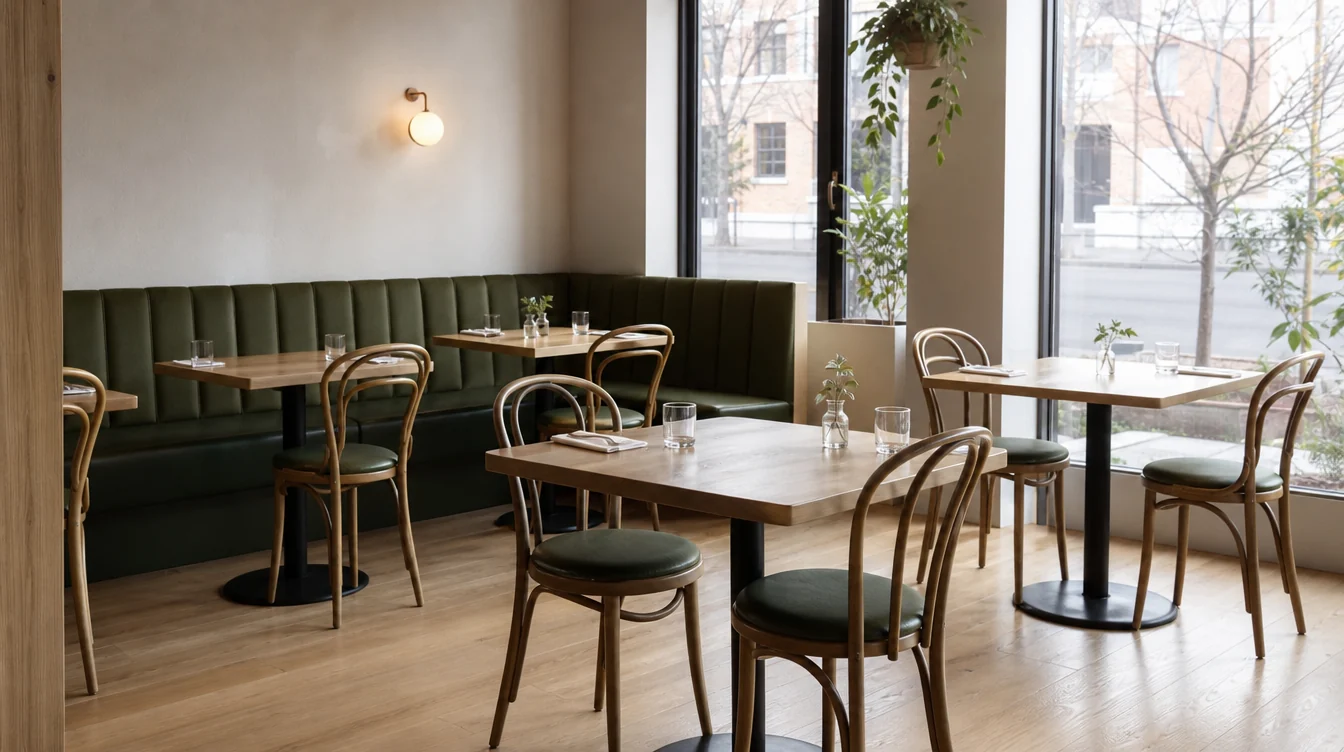
Start with the table assembly your staff will use.
A Washington café or restaurant refreshing tables should review the complete table assembly alongside its chairs. Top sizes, bases and retained furniture affect the everyday group more directly than a finish name on its own. Build the request around the table types in use, the intended handling routine and the chair relationships that need confirmation.
01 / THE FURNITURE PLAN
Create a table-type schedule.
Label each table type with its top dimensions, base description and quantity. Mark complete replacements separately from proposed new tops on retained bases. Add photographs where a part cannot yet be identified. This schedule lets the next conversation address a specific assembly rather than an ambiguous request for new café tables.
02 / THE FURNITURE PLAN
Compare chair fit at each table type.
Record the chair model or style being considered and review it at the intended table. Check the relationship to the apron, edge and base positions using the actual dimensions. If chairs are retained, include more than one representative type when the existing inventory varies. Keep any unresolved group out of the final count.
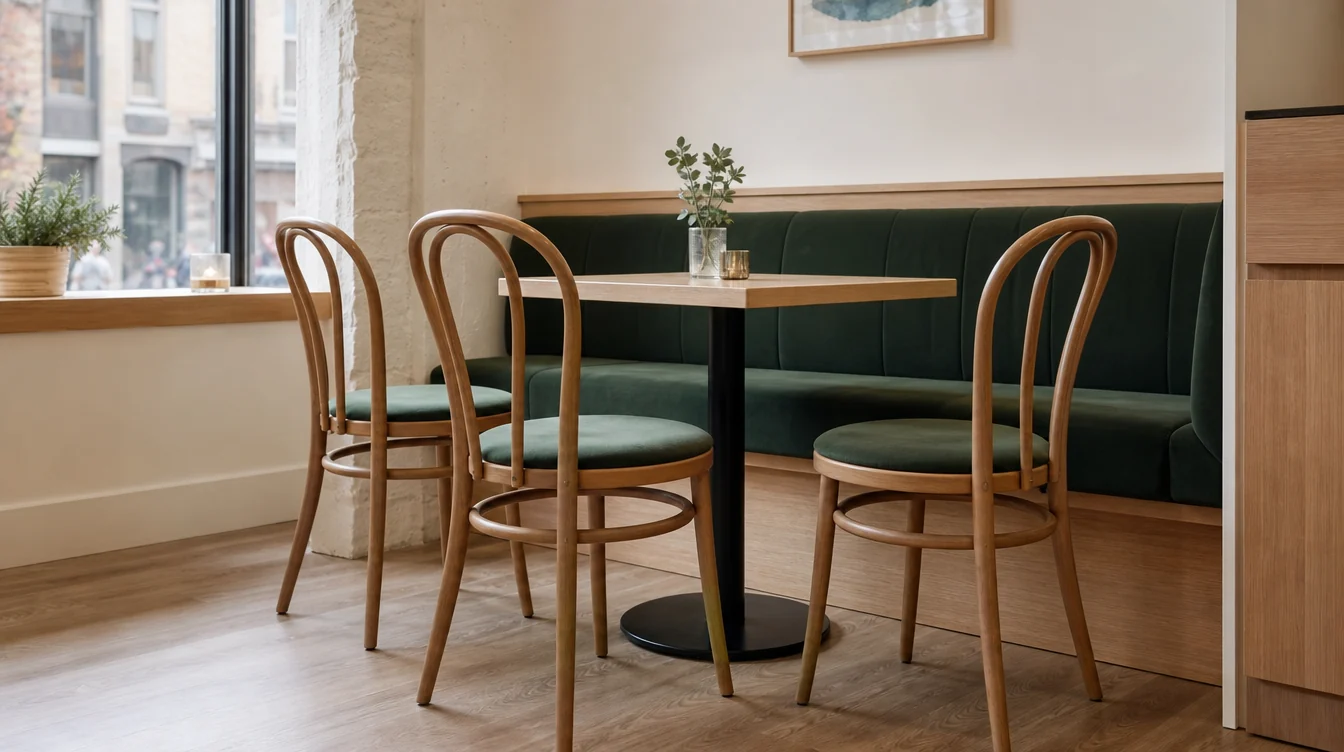
03 / THE FURNITURE PLAN
Confirm a replacement top with its base.
Ask about the particular top, size and retained base combination, including the information needed to evaluate attachment. Record the answer against that table type. Similar appearances do not establish compatibility. If a complete new assembly is also under consideration, keep it as a named alternative with its own scope.
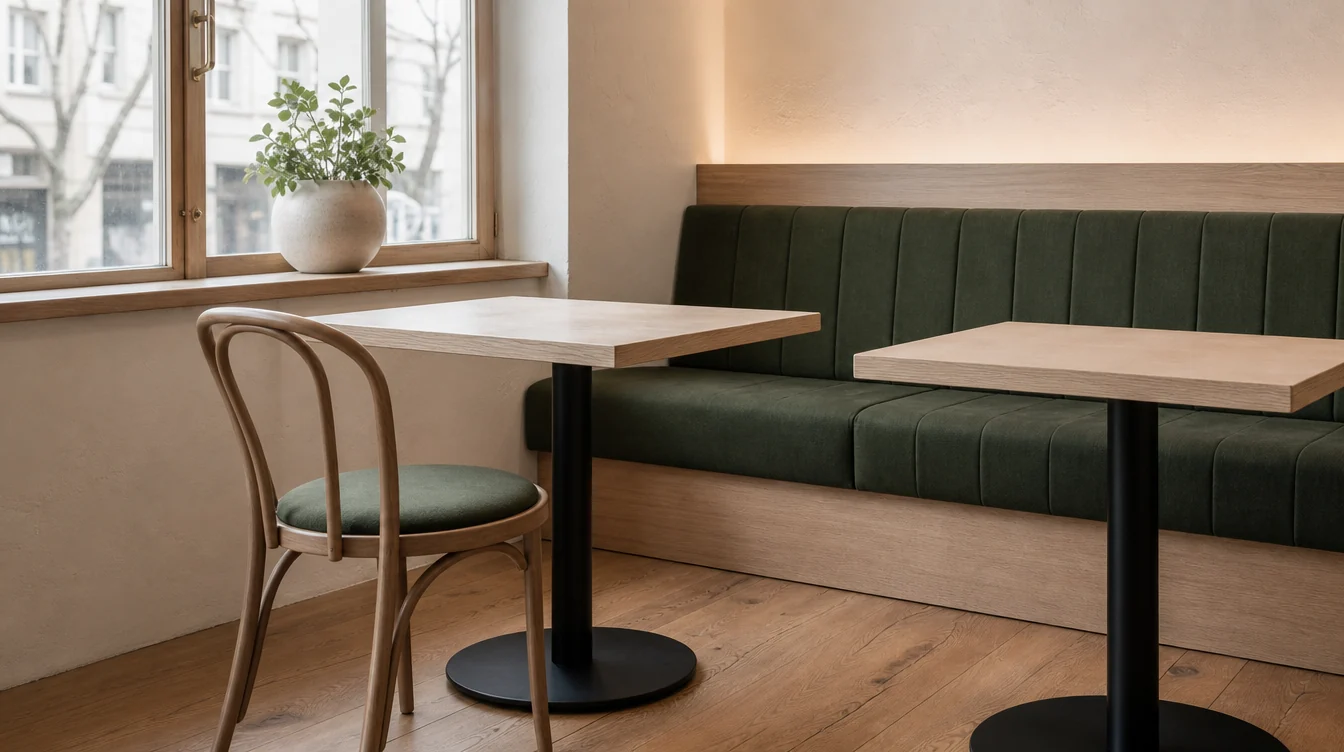
04 / THE FURNITURE PLAN
Set the booth tables apart.
A booth or banquette table has a different relationship to its seating than a freely arranged café table. Document the unit dimensions and proposed table position together. Ask what site information is required for that group. Count loose chairs used with wall seating separately from the fixed seating itself.
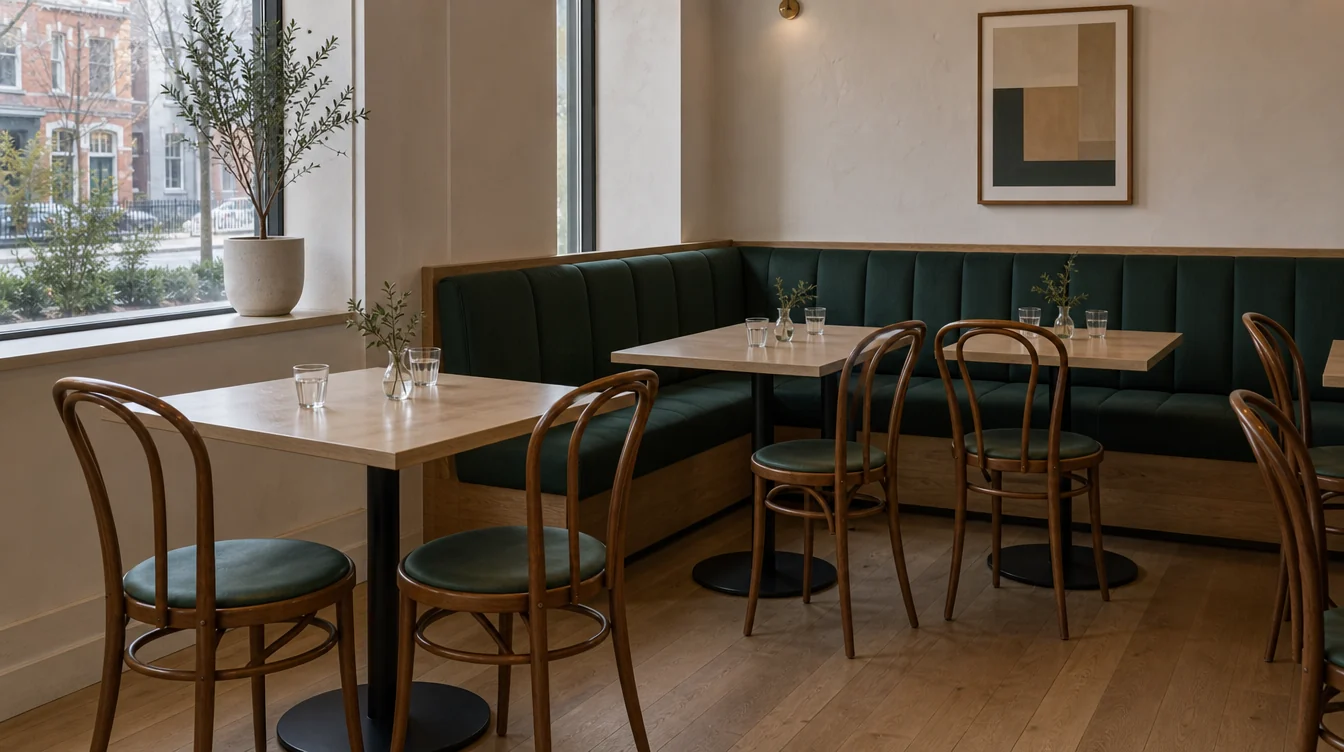
05 / THE FURNITURE PLAN
Review the daily handling routine.
Describe which tables staff move, which remain fixed and where furniture is held during cleaning. Ask for the care guidance applicable to the selected finishes and construction. Review an available sample or complete item against that routine before repeating it across the room; do not infer handling suitability from a product photograph.
06 / THE FURNITURE PLAN
Compare proposals by complete furniture group.
Organize the request by table type, with chair quantities and optional alternatives clearly attached. State the Washington location and identify any retained parts. Ask which details remain to be confirmed and keep the current sample references with the schedule so pricing and finish discussions refer to the same proposal.
A WORKED FURNITURE EXAMPLE
Tabletop and chair coordination — a quantity example
The reviewed plan contains 14 tables of one type. Six complete tables are retained, leaving eight complete replacements to consider. Separately, 36 working chairs plus four chosen extras minus 12 retained chairs produces a preliminary 28-chair purchase. A tabletop-only alternative needs its own confirmed base details.
| Planning item | Quantity |
|---|---|
| Tables of the reviewed type | 14 |
| Complete tables retained | −6 |
| Complete table replacements considered | 8 |
| Preliminary loose-chair purchase | 28 |