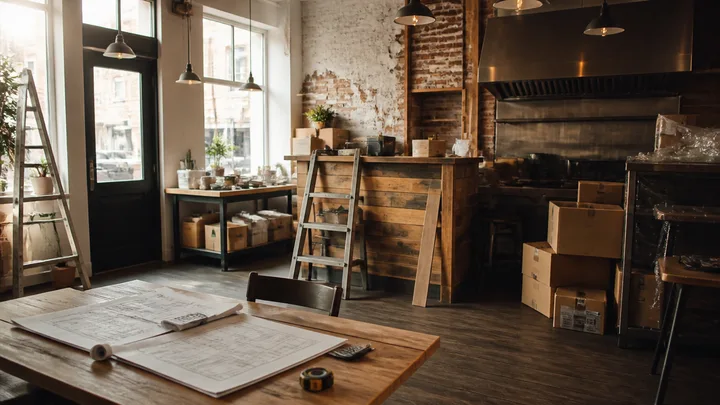
A small restaurant is not just a cheaper big restaurant. Fewer seats, a tighter kitchen, and a focused menu change the whole math. If you are planning a 20 to 50 seat neighborhood spot, cafe, or quick-service concept, this page gives you a realistic 2026 budget and shows where small operators genuinely save and where they cannot.
For the broader picture, see how much it costs to open a restaurant. Here we zoom in on the small end.
The average, in one number and a range
For a small restaurant, meaning roughly 20 to 50 seats with a limited-service or simple full-service format, a realistic all-in range in 2026 is $80,000 to $350,000. Most land somewhere in the middle, around $150,000 to $250,000, once you include buildout, equipment, furniture, licenses, opening inventory, and a working capital reserve.
The spread is wide for one reason: the space you take. A small quick-service concept moving into a second-generation restaurant space, one that already has a hood, grease trap, and gas, can open near the bottom of the range. The same concept in a raw retail shell that needs a full kitchen installed can double the total.
Sanity-check it per seat
The most reliable way to test a small-restaurant budget is cost per seat. A survey of more than 350 independent operators published by RestaurantOwner.com found a median near $3,000 per seat for leased space. Small restaurants often beat that figure because they carry a lighter finish and a smaller kitchen, but do not assume you will. Run the numbers:
- 24 seats at $3,000 per seat: about $72,000
- 40 seats at $3,000 per seat: about $120,000
- 50 seats at $3,500 per seat: about $175,000
Then add your working capital reserve on top, because per-seat figures usually cover the physical opening, not the months of runway you need afterward.
A small-restaurant cost sheet
| Line item | Small-restaurant range |
|---|---|
| Buildout / leasehold improvements | $20,000 to $150,000 |
| Kitchen equipment | $20,000 to $90,000 |
| Furniture and fixtures | $6,000 to $25,000 |
| Licenses, permits, insurance | $3,000 to $15,000 |
| Signage, POS, and tech | $3,000 to $15,000 |
| Opening inventory | $3,000 to $12,000 |
| Pre-opening payroll and marketing | $5,000 to $25,000 |
| Working capital reserve | $20,000 to $60,000 |
Every line here is the small-format version of the full restaurant startup costs breakdown. The proportions are the same; the absolute numbers are smaller because there is less of everything.
Where small restaurants actually save
Less square footage. Buildout is priced per square foot, so a 1,200 square foot space simply costs less to build than a 3,000 square foot one. This is the biggest structural saving a small concept enjoys. See buildout cost per square foot.
A smaller kitchen. Fewer cooking stations mean fewer pieces of equipment and less ventilation, plumbing, and electrical to install. A focused menu lets you skip whole categories of equipment. Price yours with how much restaurant equipment costs.
Fewer seats to furnish. Twenty-four seats of commercial chairs and tables is a far smaller order than a hundred. Budget with the restaurant furniture cost guide.
Leaner opening crew. A small restaurant opens with a smaller team, which shrinks pre-opening payroll and training costs.
Where small restaurants cannot save
Some costs are nearly fixed no matter how small you go. Do not budget as if they scale down with your seat count.
- Health permits, business licenses, and insurance are broadly similar whether you have 24 seats or 84. A liquor license, if you want one, costs the same regardless of size.
- The hood and fire suppression system in a first-gen space is a big fixed cost triggered by cooking, not by seat count.
- A working capital reserve is proportional to your operating expenses, and even a small restaurant has rent, payroll, and utilities every month before it turns a profit.
That last point is where small operators most often get hurt. The temptation is to pour every dollar into opening and keep nothing back. Revenue ramps slowly for everyone, and a small restaurant with no cushion can run out of cash in the first quarter. Hold three to six months of expenses in reserve; we size it in how much working capital to open a restaurant, and we explain the pattern in why restaurants fail in the first year.
The small-restaurant advantage worth knowing
Small formats are where much of the industry's growth is happening. The National Restaurant Association reports that limited-service operators are more likely to expand than full-service ones, which reflects how much easier a lean, focused concept is to open and replicate. A tight menu, a small footprint, and a clear identity are not a compromise; for many first-time owners they are the smartest way to start.
How small operators fund it
Because the totals are lower, small restaurants have more funding paths. Options include personal savings, an SBA 7(a) loan or the smaller SBA microloan program, equipment financing to spread out the kitchen cost, and, increasingly, a landlord tenant-improvement allowance to offset buildout. Lenders still expect an equity contribution and a business plan, but a $150,000 project is a far easier raise than a million-dollar one. Walk through the choices in how to finance a restaurant.
Your next steps
- Fix your seat count and concept. These set the scale of every line.
- Chase a second-generation space. It is the single biggest saving available to a small operator.
- Build the cost sheet above with real local quotes.
- Protect a reserve of at least three months, ideally six.
- Add a 10 to 15 percent contingency and do not spend it early.
Small full-service versus small quick-service
Two small restaurants with the same seat count can cost very differently depending on service model. A small full-service restaurant carries a full kitchen, table service, and often a small bar, which pushes it toward the upper end of the range. A small quick-service or counter-service concept skips table service, runs a leaner front of house, and often needs a simpler kitchen, which pulls it toward the lower end. If your goal is to open for the least capital, a counter-service format in a second-generation space is almost always the cheapest legitimate path to a real, permanent restaurant. Explore the formats in how to choose a restaurant concept.
What your monthly costs will look like
Opening cost is only half the picture. A small restaurant still faces monthly obligations that determine how big a reserve you need: rent, payroll, food and beverage cost, utilities, insurance, and any loan payment. Even at 30 seats, those can total $20,000 to $40,000 a month once you are staffed and open. Size your working capital against that real monthly number, not against a hope that you will be profitable in week two. Profit margins are thin in this industry, a reality we break down in restaurant profit margins explained.
Common questions
What is the absolute minimum to open a small restaurant? Realistically around $80,000 for a counter-service concept in a fully equipped second-generation space, including a small reserve. Below that, you are usually looking at a food truck or a cart rather than a fixed restaurant.
Is a small restaurant cheaper to run, not just to open? Yes on absolute dollars, because rent, payroll, and inventory all scale with size. But per-seat economics can be tighter, so a focused, high-margin menu matters even more.
Should I lease or buy the space? Almost every first-time small operator leases. Buying real estate adds a large, separate cost and ties up capital you need for operations.
Opening small is a legitimate strategy, not a consolation prize. Keep the footprint tight, the menu focused, and the reserve intact, and a small restaurant can open for a fraction of what a full-scale concept demands. When you are ready to plan the whole launch, not just the budget, start with the guide on how to open a restaurant.