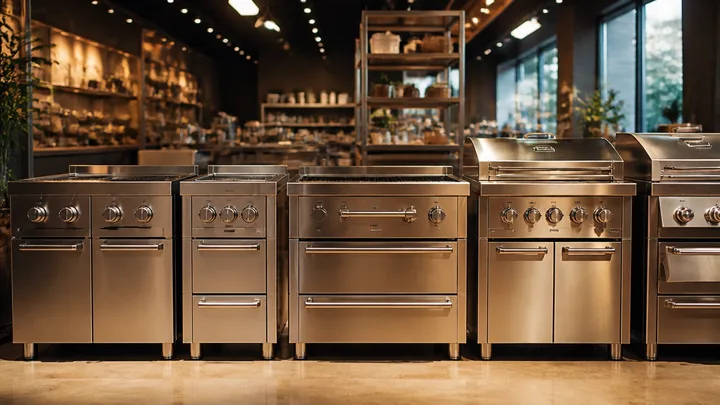
Restaurant equipment is one of the largest lines in any opening budget, and it is one of the few you can actively control by choosing new versus used, right-sizing to your menu, and buying only what you truly need on day one. A full commercial kitchen commonly runs $40,000 to $200,000, but that range is so wide it is almost useless until you break it into pieces. Here are real 2026 prices, category by category.
This page details one line from the restaurant startup costs breakdown. For the whole budget, see how much it costs to open a restaurant.
Equipment prices by category
Prices below are for new commercial-grade equipment. Used gear typically sells for 40 to 60 percent of these figures.
| Equipment | Typical new price |
|---|---|
| Commercial range (6-burner with oven) | $3,000 to $8,000 |
| Full cooking line (range, griddle, fryer) | $15,000 to $35,000 |
| Ventilation hood system (installed) | $8,000 to $20,000+ |
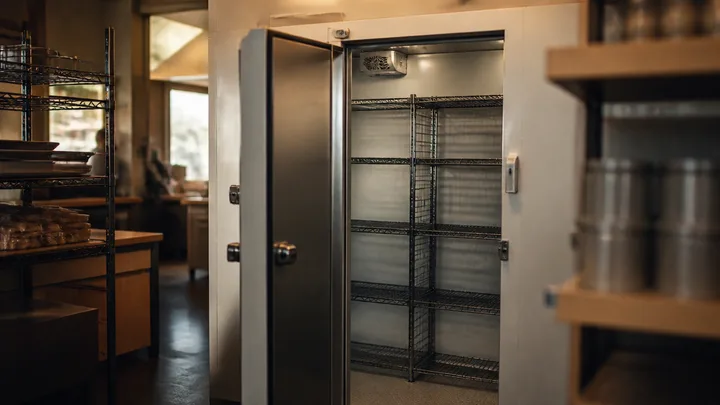
| Walk-in cooler (6x8 to 8x12) | $3,500 to $10,000+ |
| Reach-in refrigerator / freezer | $2,000 to $6,000 each |
| Commercial dishwasher | $4,000 to $12,000 |
| Prep tables and stainless work surfaces | $300 to $1,200 each |
| Ice machine | $2,000 to $6,000 |
| Mixer / food processor | $500 to $6,000 |
These align with category ranges in a commercial kitchen equipment buying guide from GoFoodService. Your actual line depends entirely on your menu: a pizzeria buys a deck or conveyor oven a burger concept never touches, and a bakery lives or dies by its ovens and proofers.
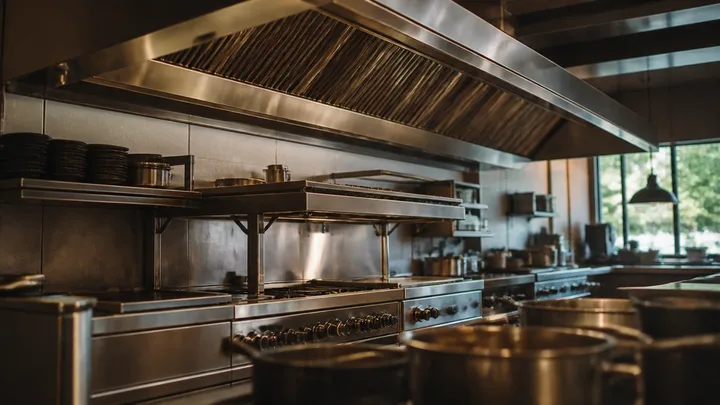
The hood is the hidden budget item
First-time owners routinely forget the exhaust hood, and it is one of the most expensive and most heavily regulated pieces in the building. A complete Type I hood system, including the canopy, ductwork, makeup air unit, fire suppression, and installation, frequently runs $8,000 to $20,000 or more. In a first-generation space with no existing ventilation, this is unavoidable and non-negotiable, because your health and fire inspectors will require it. In a second-generation space that already has a compliant hood, you may inherit it, which is one more reason second-gen space saves so much. We cover the full station-by-station list in the commercial kitchen equipment checklist and the broader restaurant equipment list.
New versus used: the real trade-off
Buying used is the single fastest way to cut your equipment bill, often in half. The trade-offs are real, so buy strategically.
Buy used for: stainless prep tables, shelving, sinks, dish machines, and gas ranges. These are simple, durable, and hold up well secondhand. A restaurant auction, a dealer of reconditioned equipment, or a closing restaurant can save you thousands.
Buy new for: refrigeration and anything with a compressor or complex electronics. A used walk-in compressor or reach-in on its last legs can fail during your first summer and take your inventory with it. New refrigeration comes with a warranty and predictable life. Combi ovens and specialized cooking equipment are also usually worth buying new.
Remember that commercial equipment depreciates fast, often 50 to 70 percent in the first year, which is exactly why the used market is full of deals. Let someone else absorb that first-year drop.
What equipment costs as a share of your budget
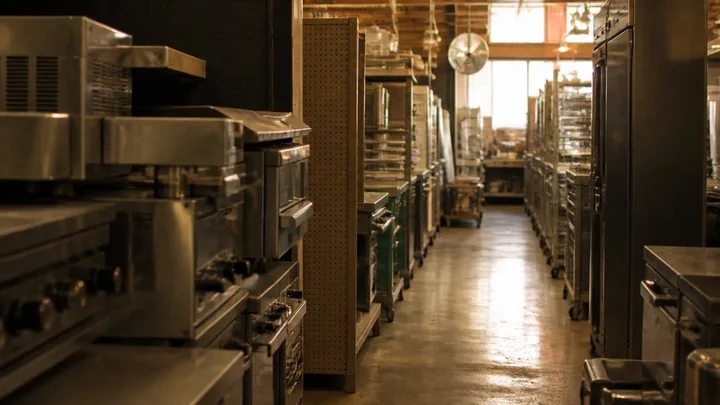
Across concepts, kitchen equipment typically represents 10 to 30 percent of total startup cost, according to survey data summarized by RestaurantOwner.com. It skews higher for equipment-heavy concepts, a pizzeria, a bakery, a full-service kitchen, and lower for concepts that lean on a small line, a coffee shop or a simple cafe. If equipment is eating far more than 30 percent of your budget, check whether you are over-buying for the menu you actually plan to serve.
How to size your equipment package to your menu
The mistake that inflates equipment budgets is buying the kitchen you imagine instead of the kitchen your menu needs. Work from the menu backward.
- Write the opening menu first. Every dish maps to a piece of equipment.
- List only the equipment each dish requires. If nothing on the menu is fried, you do not need a fryer on day one.
- Right-size capacity to your seat count and covers. A 40-seat cafe does not need a 100-seat production line.
- Separate must-have from nice-to-have. Buy the must-haves; add the rest once revenue justifies them.
- Confirm utility requirements. Gas versus electric, single versus three-phase power, and water and drain needs all affect both the equipment and your buildout. Coordinate with buildout cost per square foot.
Do not forget smallwares
Equipment gets the attention, but smallwares add up fast: pots, pans, sheet trays, knives, cutting boards, storage containers, plates, glassware, and flatware. A full opening set of smallwares commonly runs $5,000 to $20,000 depending on menu and cover count. Budget it separately so it does not ambush you the week before opening. Use the restaurant smallwares checklist to build the list.
Financing your equipment
Equipment is one of the easier restaurant costs to finance because the equipment itself serves as collateral. Many operators use dedicated equipment financing or leasing to spread the cost over the useful life, which preserves cash for buildout and working capital. Others fold equipment into a broader SBA 7(a) loan, which can cover equipment, leasehold improvements, and working capital in a single package. Leasing lowers your upfront outlay but costs more over time; buying used lowers both. Weigh the options in how to finance a restaurant.
A quick worked budget
A 45-seat fast casual concept with a simple grill-and-fry menu, buying a mix of new and used:
- Cooking line (used range and griddle, new fryer): $14,000
- Hood system (inherited from second-gen space): $0
- Refrigeration (new reach-ins, used walk-in): $12,000
- Dish machine (used): $4,500
- Prep tables, shelving, sinks (used): $4,000
- Ice machine (new): $3,500
- Smallwares: $8,000
- Equipment total: about $46,000
Put that same concept in a first-gen space needing a new hood, and add $12,000 to $18,000 immediately. The space you choose keeps showing up as the biggest swing factor, in equipment just as in buildout.
The bottom line
Do not forget installation, delivery, and utilities
The sticker price on a piece of equipment is not the landed cost. Heavy equipment carries delivery and rigging fees, gas and electric connections require a licensed contractor, and refrigeration and cooking lines may need drains and dedicated circuits added during your buildout. A hood system is priced installed for a reason: the installation often costs as much as the canopy itself. When you budget equipment, add a line for delivery and installation, commonly 10 to 20 percent on top of the equipment price, and coordinate the utility work with your general contractor so nothing arrives before the space can power it.
Buy new for compliance-critical items
Some equipment is not just about performance, it is about passing inspection. Your ventilation hood, fire suppression, and any equipment that touches food safety must meet code and, in most jurisdictions, carry recognized certification such as NSF for foodservice equipment. Buying these new, or buying used only when you can verify certification and condition, protects you from a failed inspection that delays your opening. A cheap uncertified piece that an inspector rejects is the most expensive equipment you can buy.
Common questions
How much is a full commercial kitchen? Commonly $40,000 to $200,000 depending on menu, volume, and new versus used, with equipment-heavy concepts like pizzerias and bakeries at the top.
Is it worth buying used restaurant equipment? Yes for durable, simple items like prep tables, sinks, and gas ranges. Be cautious with refrigeration and complex electronics, where a warranty and predictable life are worth the premium.
Can I lease restaurant equipment? Yes. Leasing lowers your upfront cash outlay and spreads the cost, though it costs more over the equipment's life than buying outright.
Restaurant equipment cost is controllable in a way most opening lines are not. Build the list from your menu, buy used where it is safe and new where it counts, inherit a hood if you possibly can, and finance the package so it does not drain the cash you need to survive your first months. Do that, and one of the scariest numbers in the budget becomes one of the most manageable. To plan the rest of the project around your equipment, work from the full guide on how to open a restaurant.