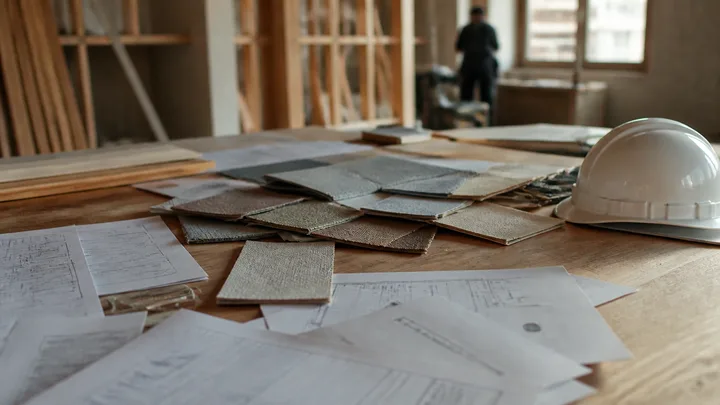
If you only know the headline number, you cannot manage it. A restaurant startup costs breakdown turns a scary lump sum into eight buckets you can price, negotiate, and cut one at a time. Below is each line item with realistic 2026 ranges, what drives it up or down, and where to find deeper detail.
For the big-picture ranges by concept, start with how much it costs to open a restaurant. This page is the itemized version.
The one-page cost sheet
| Line item | Typical range | Share of budget |
|---|---|---|
| Leasehold improvements / buildout | $50,000 to $500,000+ | 25% to 45% |
| Kitchen equipment | $40,000 to $200,000 | 10% to 30% |
| Furniture and dining fixtures | $10,000 to $80,000 | 5% to 15% |
| Licenses, permits, insurance | $5,000 to $30,000+ | 2% to 8% |
| Signage, tech, and POS | $5,000 to $40,000 | 2% to 6% |
| Opening inventory | $5,000 to $25,000 | 2% to 5% |
| Pre-opening payroll and marketing | $10,000 to $60,000 | 5% to 12% |
| Working capital reserve | $30,000 to $100,000+ | 15% to 30% |
Shares overlap because concepts differ. A bar tilts toward licenses and inventory; a fine dining room tilts toward buildout and furniture. Use the ranges as guardrails, not gospel.
1. Leasehold improvements and buildout
For most operators this is the largest single expense and the least predictable. A contractor estimate from EB3 Construction puts a tenant-improvement buildout in an existing shell at roughly $150 to $350 per square foot for hard construction alone, before design fees, furniture, or equipment. Ground-up or high-finish concepts run far higher.
The decisive variable is whether you take a second-generation restaurant space, which already has ventilation, grease traps, gas, and drains, or a raw first-generation shell that needs all of it installed. That single choice can halve or double this line. Our buildout cost per square foot page breaks the number down by concept and market.
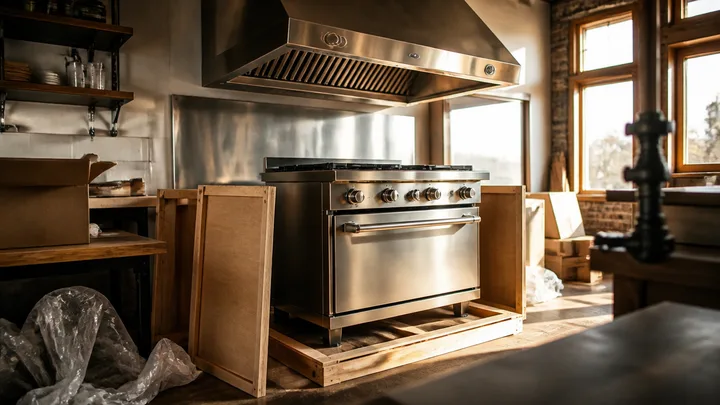
2. Kitchen equipment
The cooking line, refrigeration, ventilation hood, dish machine, and prep tables. A full commercial kitchen commonly runs $40,000 to $200,000. A single six-burner range with an oven is $3,000 to $8,000, a compliant hood system installed is often $8,000 to $20,000, and a walk-in cooler starts around $3,500 and climbs past $10,000 for larger or custom builds. Buying used at 40 to 60 percent of new prices is the fastest way to compress this line. See how much restaurant equipment costs and the full restaurant equipment list for a station-by-station view.
3. Furniture and dining fixtures
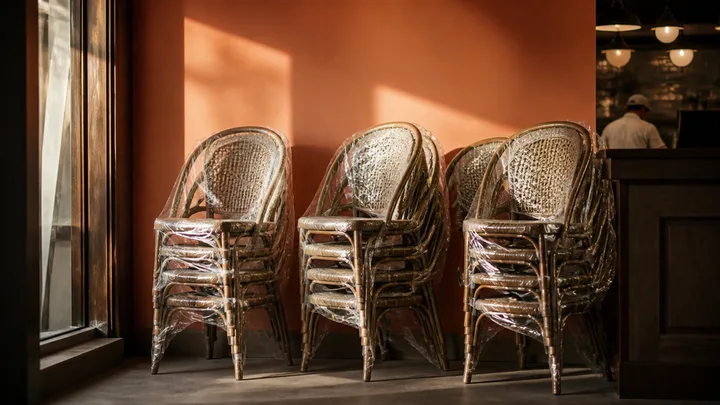
Tables, chairs, booths, bar stools, and host stands. Commercial-grade dining chairs typically run $90 to $250 each, tables land around $185 to $500, and booths are the priciest per seat, often $400 to $1,200 per unit installed. A modest 60-seat room might spend $10,000 to $25,000; a larger room with custom booths spends much more. Guidance and per-piece ranges are in the restaurant furniture cost guide.
4. Licenses, permits, and insurance
Every restaurant needs a business license, a health or food-service permit, and food handler certification for staff. If you serve alcohol, a liquor license is a separate and highly variable cost, from a few hundred dollars in some states to several hundred thousand in quota-limited markets. General liability, property, and workers compensation insurance add ongoing premiums. Budget $5,000 to $30,000 or more up front, understanding the top end is almost entirely liquor licensing. Our licensing cluster starts with what licenses you need to open a restaurant.
5. Signage, technology, and POS
Exterior signage, a point-of-sale system, kitchen display screens, network hardware, and reservation or online-ordering software. Modern POS is often sold on a monthly subscription with hardware financed separately, so the upfront hit can be modest, but a full setup with multiple terminals, a kitchen display, and printers still runs $5,000 to $40,000 to install. Compare options in our guide to restaurant POS systems.
6. Opening inventory
Your first food and beverage order plus par levels of smallwares, cleaning supplies, and paper goods. Food inventory alone is commonly $5,000 to $25,000 depending on menu breadth and storage. Bars carry more because spirits, beer, and wine inventory is expensive to stock deep. Do not confuse opening inventory with the reorders you will place every week once open.
7. Pre-opening payroll and marketing
You pay rent, managers, and a training crew for weeks before you take a single order. Add a soft-opening period, uniforms, and a launch marketing push. This bucket is easy to underestimate because it feels like it should not count, but it is real cash out the door. Plan your calendar with the restaurant startup checklist and the soft opening checklist.
8. Working capital reserve
The most underfunded line and the most important. Revenue ramps slower than owners expect, so you need cash to cover operating losses through the first several months. The consensus is to hold three to six months of operating expenses, and six is the safer target. For most independents that is $30,000 to $100,000 or more. This is separate from every line above. We size it in how much working capital to open a restaurant.
A per-seat gut check
After you add up all eight lines, divide by your seat count. A survey of more than 350 independent operators, summarized here, found a median near $3,000 per seat for leased space. If your itemized total works out to $1,500 per seat, recheck your buildout and working capital lines, because you have probably underpriced one of them. If it lands north of $5,000 per seat, confirm your finish level and kitchen scope are truly what the concept requires.
Where to cut without breaking the concept
- Take a second-generation space. The biggest lever in the whole sheet.
- Buy used for back-of-house equipment guests never see, and new for the front of house they do.
- Phase non-essential finishes. Open with a clean, functional room and reinvest profits into upgrades.
- Negotiate a tenant-improvement allowance into your lease so the landlord funds part of the buildout.
- Protect the reserve. Cut anywhere before you cut working capital.
Funding the total
Once the sheet is complete, you have the number you will present to lenders. The SBA 7(a) program is the most common government-backed loan for restaurants, but expect to contribute 20 to 30 percent of the project as your own equity and to show a lender the exact breakdown above. A clean, itemized cost sheet is what separates a fundable plan from a rejected one. See how to finance a restaurant for the full menu of options.
One-time costs versus recurring costs
A startup budget mixes two kinds of money, and confusing them is a classic mistake. One-time costs, the buildout, the equipment purchase, the furniture, the initial licenses, hit once and you are done. Recurring costs, rent, payroll, food and beverage, utilities, insurance premiums, and loan payments, repeat every month for the life of the business. Your startup budget funds the one-time costs plus enough working capital to cover the recurring costs through the ramp period. When you model the business, keep these in separate columns. It is the only way to see both what it takes to open and what it takes to keep the doors open, and it is the structure lenders and investors expect to see.
Build a contingency into every line
Restaurant projects run over. Permits take longer than promised, a wall opens up to reveal a plumbing surprise, an equipment lead time slips past your opening date. Professional operators add a 10 to 15 percent contingency to the buildout and hold it as untouchable until the project is complete. The contingency is not padding you spend early on nicer finishes; it is the buffer that keeps a normal overrun from forcing you to raid your working capital reserve. If you finish under budget, the leftover contingency simply becomes extra runway, which is never a bad outcome.
Common questions
What is the single biggest startup cost? For most restaurants it is leasehold improvements and buildout, followed by kitchen equipment. Together they often make up more than half the budget.
How much should I budget for the reserve? Three to six months of operating expenses, sized from your own monthly costs, held completely separate from the eight lines above.
An itemized budget is not busywork. It is the document that tells you whether your concept can actually open at a price you can raise. Build it before you sign anything, and revisit it every time you get a real quote back from a contractor, an equipment dealer, or an insurer. For the full launch roadmap around this budget, start with the guide on how to open a restaurant.