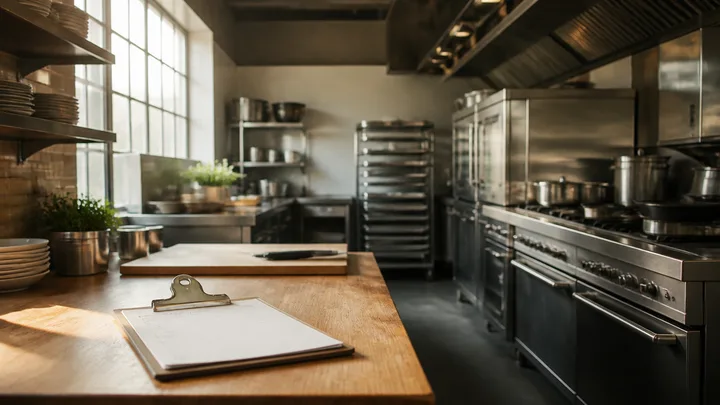
A commercial kitchen is a workflow, and equipment is what makes that workflow legal, safe, and fast. This checklist organizes commercial kitchen equipment by station so you can spec a build, price a lease, or prep for plan review without missing the pieces that stop an opening cold. Work it station by station, and cross-check every food-contact purchase for an NSF certification mark, which is the sanitation credential your inspector expects to see.
Before you buy anything, know what standard you are building to. Your local health department enforces a version of the FDA Food Code, which governs handwashing sinks, temperature control, cleanable surfaces, and separation of raw and ready foods. Almost every requirement below traces back to that model code.
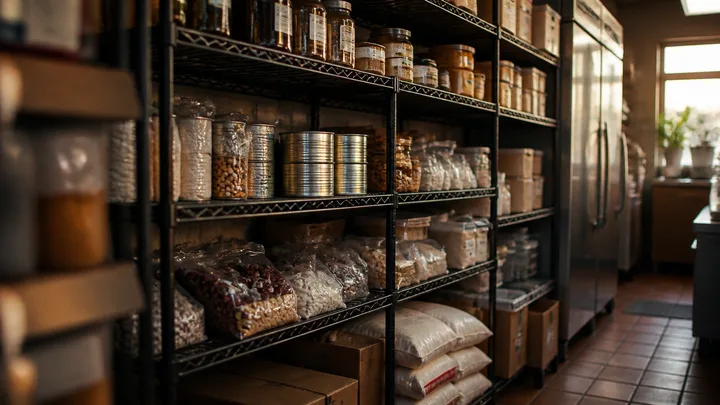
Receiving and dry storage
The back door is where food safety starts.
- Receiving scale to verify delivered weights
- Dry-storage shelving, corrosion resistant, adjustable, and rated for load
- Ingredient bins on casters for flour, sugar, and rice
- Sealed food storage containers with lids
- First-in, first-out labeling and a rotation system
- Thermometer for the storeroom if you hold temperature-sensitive goods
Keep everything at least six inches off the floor. That single clearance rule appears on inspection reports constantly, so buy shelving with legs, not shelving that sits on the ground.
Cold storage and refrigeration
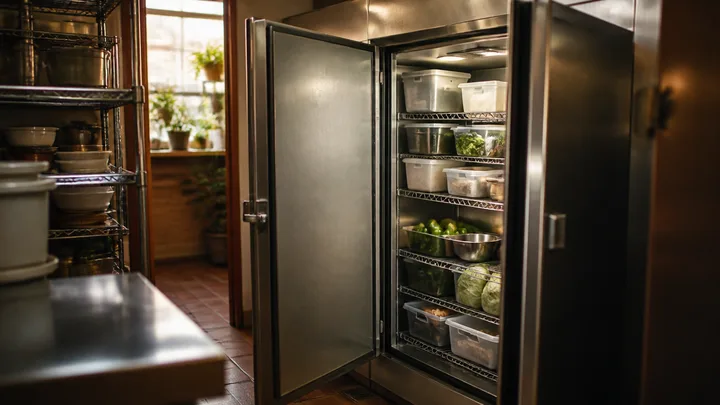
Refrigeration is your food-cost insurance and your Food Code backbone.
- Walk-in cooler sized to your covers and delivery frequency
- Walk-in freezer if volume justifies it, or reach-in freezers if not
- Reach-in refrigerators for the line
- Undercounter and worktop refrigeration at each station
- Refrigerated prep tables with pan rails for sandwich, salad, or pizza builds
- Ice machine plus a sanitary ice bin and scoop holder
Refrigeration runs around the clock, so lifetime energy cost often exceeds purchase price. The ENERGY STAR list of certified commercial food service equipment includes refrigerators, freezers, and ice makers, and swapping to certified units can cut utility and water spend by a meaningful margin across a lease.
The cook line
Spec the line to your menu, not to a generic template. A pizzeria and a fine-dining kitchen share almost none of the same heavy equipment.
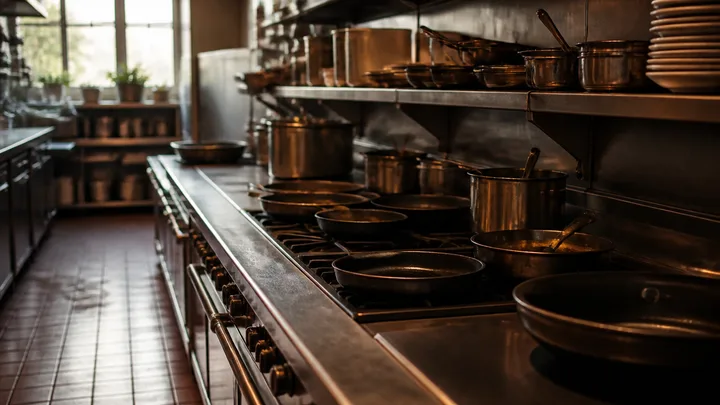
- Range and oven, or separate range top plus convection or combi oven
- Char-broiler, grill, or flat-top griddle per menu
- Deep fryer, correctly sized to your fried volume
- Salamander or cheese-melter for finishing
- Steam equipment such as a combi oven, steamer, or tilt skillet
- Holding cabinets to keep prepped food at safe temperature
- Heat lamps and a pass or expo station
Fryers, ovens, steamers, and hot-holding cabinets are all ENERGY STAR categories, so this is the second place, after refrigeration, where certified equipment pays back.
Ventilation and fire suppression
This is code-mandated infrastructure, not a discretionary upgrade.
- Type I exhaust hood over all grease-producing equipment
- Make-up air unit to balance the exhaust
- Wet-chemical fire suppression system, professionally installed and tagged
- Class K fire extinguisher within reach of the cook line
Hood sizing, suppression, and make-up air get reviewed and inspected separately from the health permit, often by the fire marshal. Budget for professional design and certified installation.
Food prep stations
- Stainless work tables with undershelves
- Commercial slicer, mixer, and food processor per menu needs
- Immersion and countertop blenders
- Color-coded cutting boards to separate proteins and produce
- Portion and receiving scales
- Mounted can opener
- Dedicated prep sink
Warewashing and sanitation
Warewashing failures are among the fastest ways to fail an inspection, so build it as a complete system.
- Commercial dishwasher, high-temperature or chemical-sanitizing
- Three-compartment sink for manual warewashing, required in most jurisdictions even with a machine
- Dedicated handwashing sinks, one per work area, never used for prep
- Mop or utility sink
- Grease trap or interceptor per plumbing code
- Soiled and clean landing tables around the dish machine
- Sanitizer buckets, dispensers, and test strips
The handwashing sink rule is strict: it must be accessible, stocked with soap and towels, and reserved for handwashing. Inspectors check it early.
Smallwares and hand tools
The heavy equipment above is useless without pans and tools. Hotel pans, sheet pans, knives, tongs, ladles, thermometers, and storage containers all belong on the build sheet. Because the list runs long, we itemize it separately in the restaurant smallwares checklist. Do not leave smallwares to the last week, because thermometers, sanitizer test strips, and enough hotel pans to run a full service are compliance items, not afterthoughts.
Technology at the pass
- Kitchen display system or ticket printer
- POS integration from front of house to kitchen
- Business-grade internet with a backup connection
Your kitchen tech should tie into whatever front-of-house platform you pick, so compare options in our guide to the best restaurant POS systems.
Size the kitchen to your menu and volume
A checklist tells you what to buy, but volume tells you how much. The most expensive mistake in kitchen equipment is buying the wrong capacity, either starving the line on a busy night or paying for a walk-in you never fill.
Work from three inputs: your projected covers at peak, your menu complexity, and your delivery frequency. High peak volume argues for more line refrigeration, larger fryers, and holding cabinets so the line is not rebuilding mid-rush. A complex, from-scratch menu argues for more prep equipment, more hotel pans, and deeper cold storage. Frequent deliveries let you shrink storage, while twice-weekly deliveries force you to size up walk-ins and dry storage to hold par between drops.
A useful sizing discipline: list every menu item, then map each to the specific equipment and the cold or dry storage it consumes. Sum the peak-hour demand on each station, and spec the equipment to that peak, not to your average. A line built for the average falls apart on the night that matters.
Common inspection failures to design out
Health inspectors see the same failures over and over, and most are equipment-placement issues you can prevent on paper:
- A handwashing sink blocked, missing soap or towels, or used for prep
- No air gap or backflow protection on plumbed equipment
- Missing or undersized grease interceptor
- Cutting boards and gaskets too worn to clean, which the Food Code treats as not cleanable
- Food or shelving sitting directly on the floor
- Refrigeration that cannot hold safe temperature under load
- Uncertified, non-cleanable food-contact surfaces
Design these out before the build, because each one is a re-inspection risk that can push your opening back by weeks.
Plan-review punch list
Before you sign off on a buildout, confirm the compliance-critical pieces are in place and correctly located on your floor plan:
- A handwashing sink in each required area
- A three-compartment sink for manual warewashing
- A grease interceptor plumbed correctly
- Adequate refrigeration for your prep volume
- A Type I hood over every grease-producing appliance
- NSF-certified, cleanable surfaces throughout
- Six-inch clearance under shelving and equipment
Get those right and the rest of the build is flexible. Miss one and you can lose weeks waiting for a re-inspection.
Buy new, buy used, or lease
Durable items that are hard to damage, such as stainless tables, shelving, and some cooking equipment, are often smart used buys. Anything with a compressor, an electronic control, or a warranty that matters, such as refrigeration, ice machines, and combi ovens, is usually better bought new. Leasing can preserve cash for a first-time operator, but compare the total lease cost against ownership before you commit. For the full budget picture, see how much restaurant equipment costs, and for a broader inventory beyond the kitchen, use the categorized restaurant equipment list.
Sequence the order to protect your opening date
Long-lead items dictate your timeline. Walk-ins, exhaust hoods, and fabricated stainless can take weeks to arrive and install, so order them first. Refrigeration and cooking equipment come next, and smallwares last. If you are opening a specific concept, our hub guide on how to open a restaurant ties equipment into the licensing, buildout, and staffing timeline so the pieces land in the right order.