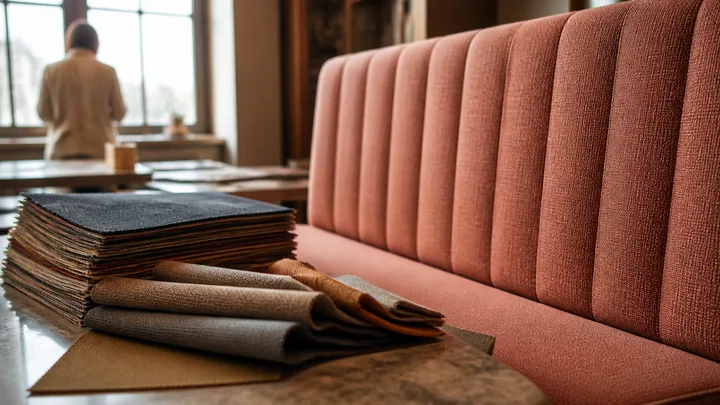
Order samples to answer a specific buying question. A finish swatch can help you choose color, but it cannot show whether a chair fits under your tables or is practical to move. A sample chair can test those issues, but may not represent the upholstery or finish in your final quote.
List the decisions you need to make before asking a supplier what it can provide.
Choose the right kind of sample
| Decision | Useful sample |
|---|---|
| Frame color and sheen | Finish sample for the actual product line |
| Upholstery appearance and feel | Identified fabric or coated-material sample |
| Chair comfort and handling | Complete chair in the proposed configuration |
| Table edge and surface | Fabricated sample showing the edge and finish |
| Full dining combination | Proposed chair, top and base together |
| Matching retained furniture | New sample beside the existing piece |
Ask about sample charges, freight, returns, condition requirements and whether any credit against a later purchase is offered. None of those arrangements is automatic.
Confirm that the sample is from the correct model or material family. A “close example” may help explain a concept, but should not become the approved reference for an order.
Label every piece before comparing it
Record supplier, manufacturer, model, color or finish code, material and date received. Keep the packaging label or photograph it.
Swatch size and finish can affect how representative it is. Formica states that swatch samples may be supplied in standard finishes; ask for the finish you intend to order, especially when sheen or texture matters.
If a supplier cannot provide the exact version, record what remains unverified. Do not mark the entire specification approved because the nearest sample looks acceptable.
Review color in the actual room
Put samples beside floors, retained furniture, wall finishes and tableware. Check daytime and evening lighting rather than choosing under an office lamp alone.
Compare broad relationships first: light and dark, warm and cool, smooth and textured. Then check whether repeated wood tones or metal finishes look deliberate together.
Photographs help keep a record, but they are not reliable color standards. Retain an approved physical sample where practical and state how production variation will be handled.
Run a realistic chair-and-table trial
Use normal dining posture and the type of service the furniture will support. Have several intended users or staff members try the combination, recognizing that preferences and needs differ.
Check whether arms clear the table, whether the base interferes with feet and whether the chair can be moved and tucked in without awkward handling. Inspect the floor-contact parts and ask whether alternatives are available for your floor.
Record observations, not just “comfortable.” For example: “Chair back projects beyond the expected footprint” or “seat edge presses behind the knee for one tester.” Do not overload, rock or misuse the sample as a home-made strength test.
Test care only within approved instructions
Ask for the exact material's cleaning guidance before applying anything. Explain the food spills and cleaning products your operation expects to encounter.
Sunbrella provides separate cleaning resources by fabric type. A method approved for one textile is not approval for a chair's frame, seams, backing or another manufacturer's upholstery.
Get permission before any test that could damage a returnable sample. Where a cleaning demonstration is appropriate, use an agreed procedure and record the result rather than making an unsupported stain-proof claim.
Finish with an approval record
For each sample, note approved, rejected or pending; the reason; who decided; and any conditions. Keep rejected options too until the order is settled so they are not accidentally substituted later.
The approval should identify the model, dimensions, material, finish, sample reference and quote revision. Any production substitution or specification change should reopen the relevant approval.
Use the look and finishes step to record preferences and supporting notes. Then carry the approved identifiers into the quote brief, clearly marking anything a sample did not establish.